
Train type United Kingdom
The various train kinds and classifications in the UK range from high-speed to local trains.
Arriva Trains Wales (ARR)
Wales, including the Cardiff area’s Valley Lines service network. Birmingham, Manchester, Liverpool, and the border counties of England are also included.
C2c (C2C)
Commuter service from south-east Essex to London’s Fenchurch Street.
Chiltern Railways (CHR)
Birmingham – London
CrossCountry (CC)
From Scotland and North East England to Brighton, Bournemouth, and the South West of England.
Stansted Airport, Leicester Airport, and Birmingham Airport.
Nottingham, Birmingham, and Cardiff.
East Coast (EAC)
The East Midlands, Yorkshire and Humberside, North East England, Scotland, and London King’s Cross.
East Midlands Trains operates (EMT)
London, the East Midlands, and Yorkshire: Leicester, Nottingham, Derby, Sheffield, Leeds.
Nottingham, Derby, Worksop, Lincoln, Cleethorpes, Skegness, Leicester, and Cambridge are all in central England.
Enterprise (ENT)
….
Eurostar (EST)
The quickest way to travel from the UK to the continent is via high-speed Eurostar train, which runs through the Channel Tunnel and connects London with Paris and Brussels.
There are direct flights from London to Disneyland Paris, Bourg St. Maurice in the French Alps, and Marseille. There are more lines from Paris to Cologne, Amsterdam, and Brussels.
Eurostar tickets fall into three categories:
“Eurostar Standard”: Refunds and exchanges are available for tickets. A small daypack or handbag and two large pieces of luggage are permitted. Wi-Fi is provided for free.
“Eurostar Plus”: You can also enjoy extra-large seats, as well as light meals and beverages delivered right to your seat.
“Eurostar Premier”: In addition to the aforementioned amenities, you can enjoy a private lounge at the stations in Brussels, Paris, and London.
boarding with priority. Additionally, a delicious dinner and beverages will be brought to your seat. Additionally, you are allowed to bring three large pieces of luggage.
Lastly, you have up to 48 hours after departure to switch your tickets and receive a refund.
Eurostar has a fleet of high-speed trains, including the more recent “Velaro 320” and the older “TMST” (Trans Manche Super Train).
TMST: – only first-class power outlets – no Wi-Fi – access is disabled
Bicycle spaces; two restaurant carriages with food and beverages; and the trains’ ongoing modernization, which includes adding Wi-Fi and power outlets, among other amenities
Velaro 320: bike storage, WiFi, power outlets at each seat, and disabled access
There are two restaurant cars with drinks and nibbles available.
Passengers holding Standard and Plus tickets on Eurostar are required to check in at the station at least half an hour prior to departure. Premier ticket holders are required to check in no later than ten minutes prior to departure.
London Midland (LM)
Milton Keynes, Birmingham New Street (via Northampton), and London Euston.
Local trains in London
To go about the city and outside of the Tube, take the London train system.
Beyond the Tube system, London’s rail services run all over the city. Most local train lines accept Visitor Oyster cards, Oyster cards, Travelcards, and contactless payment cards.
These include the London Overground, National Rail services, and the Elizabeth line. These lines link to the Tube network.
London Overground
Six routes make up the London Overground network in suburban areas of the city, including a few stations in Zone 1 and Watford, Hertfordshire. The London Underground has interchanges at several Overground stations.
Similar to the Tube, the London Overground Night Service is in operation on the Windrush line for 24 hours on Friday and Saturday nights.
Use a free London travel map or visit the Transport for London website to plan your trip on the London Overground.
How many different types of trains are there in the London Underground?
The London Underground currently operates eleven distinct train types. The age, style, and function of these trains vary. They serve a variety of functions throughout the network, such as:
- 1. S7 and S8 Stock: Used on the Metropolitan, Circle, Hammersmith & City, and District lines for urban/suburban services.
2. S Stock: Used on the Metropolitan, Circle, Hammersmith & City, and District lines for urban/suburban services.
3. On the Piccadilly line, 1973 stock was utilized. - 4. 1995 Stock: Northern line use.
- 5. Stock from 1996: Applied to the Jubilee line.
- 6. Central line 1992 Stock: In use.
- 7. 1996/97 Stock: Bakerloo line use.
- 8. 1972 Stock: The Victoria line uses it.
- 9. The District line uses D78 stock.
10. C69 and C77 Stock: Used on the Circle and Hammer - 11. A60/62 and A Stock: Used on the Metropolitan line.
Every kind of train is specially made to satisfy the specifications of the line it travels on, taking into account elements like infrastructure compatibility, speed, and capacity.
National Rail services in London
In addition to providing rail services to the majority of London’s airports, National Rail runs local train lines across the city.
For comprehensive details on London train routes, timetables, and fares, visit the National Rail website.
The following are the primary train companies that link the city center with Greater London and beyond:
- Chiltern Railways
- Greater Anglia
- Great Northern
- Great Western Railway
- London Northwestern Railway
- Southeastern
- Southern
- South Western Railway
- Thameslink
The Elizabeth Line
The Elizabeth line travels through downtown London to Shenfield and Abbey Wood from Heathrow Airport and Reading.
TfL Rail was the name of the service that connected these regions before the opening of the Elizabeth line.
Paddington, Farringdon, Liverpool Street, and Stratford stations are some of the main interchanges where the Elizabeth line connects to London Underground, DLR, National Rail, and London Overground services.
From Heathrow airport, passengers on the Elizabeth line can travel to Excel London Exhibition Centre in 50 minutes and to central London in roughly 30 minutes.
How to pay for train journeys in London
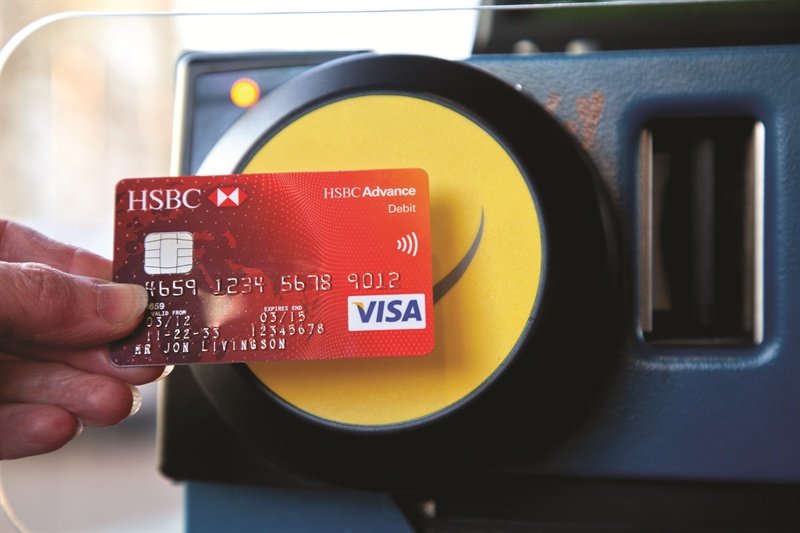
All London Overground trains and the majority of National Rail services operating in Zones 1 through 9 accept Visitor Oyster cards, Oyster cards, or contactless payment cards.
To find out if there are any transaction fees or other charges associated with contactless payment cards issued outside of the UK, check with your bank.
The time of day (peak or off-peak hours) and the zones you pass through determine the train cost.
Certain rail services to the airport, such as the Heathrow Express and Gatwick Express, accept Oyster cards and contactless payment cards. The Stansted Express does not accept contactless or Oyster cards, and tickets can be bought at the station or online in advance.
Read More:- How many train stations are in the USA

2 thoughts on “How many train types are there in United Kingdom? Local trains in London”